

Flooded Roadway Car Accidents in San Juan: Who Is Responsible When Standing Water Contributes to a Crash?
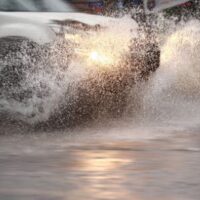
Heavy rain can change driving conditions in San Juan within minutes. Water collects across a lane, visibility drops, and a vehicle that was moving normally can suddenly lose traction. A driver may hydroplane into another car, while a second collision occurs because traffic ahead has stopped for a stalled vehicle. What initially looks like a weather-related accident can involve several separate questions of fault.
Rain alone does not determine responsibility for a crash. Driver speed, the depth and location of standing water, the condition of roadway drainage, warnings to motorists, and previous flooding at the same location can all affect a personal injury claim. An experienced San Juan car accident lawyer can investigate how the collision developed and determine whether responsibility extends beyond the motorists who were directly involved.
Standing Water Changes What Counts as a Safe Driving Speed
A posted speed limit does not necessarily mean that speed is safe during a downpour. Puerto Rico’s Vehicle and Traffic Act requires motorists to regulate their speed with due care based on traffic, roadway conditions, and other circumstances. Article 5.01 specifically requires a driver to reduce speed or stop when necessary to avoid an accident and calls for a safe speed when weather or roadway conditions create additional hazards.
That rule becomes particularly important in a hydroplaning accident. A driver traveling through visible standing water at a speed that leaves little room to react may lose steering or braking control. Investigators may examine the driver’s speed before entering the water, braking behavior, traffic conditions, and whether other vehicles were already slowing ahead.
The insurance company may describe hydroplaning as something the driver could not prevent. That conclusion is not automatic. A motorist approaching a visibly flooded section of road in Santurce, Hato Rey, Río Piedras, or another part of San Juan still has a responsibility to respond to the conditions ahead.
Stalled Vehicles Can Trigger a Second Collision
Floodwater can disable a vehicle before any impact occurs. Water reaching mechanical or electrical components may cause the engine to stall, leaving the vehicle stopped in an active traffic lane. Another driver then approaches the obstruction and crashes into the stalled car or swerves into neighboring traffic.
Fault in that situation depends heavily on how the events unfolded. A driver who enters water that is obviously too deep may face questions about the decision to proceed. A driver who encounters an unexpectedly deep pool with little opportunity to avoid it presents a different set of facts. The conduct of approaching motorists also remains important, particularly if reduced visibility and wet pavement called for more distance between vehicles.
These crashes can become even more complicated when several vehicles are involved. One vehicle may hydroplane, another may stop successfully, and a third may cause the most serious impact. Reconstructing the sequence helps determine which acts actually contributed to the injuries and property damage.
Repeated Flooding Can Put Roadway Maintenance Under Scrutiny
Some flooded-road accidents deserve a closer look at the roadway itself. Standing water can result from clogged storm drains, inadequate drainage capacity, deteriorated infrastructure, construction activity, or a low section of pavement that repeatedly collects runoff.
The question then becomes what the entity responsible for the roadway knew before the crash. Previous flooding reports, maintenance requests, drainage inspections, repair records, photographs from earlier storms, and complaints from motorists or nearby residents can help show whether the condition had developed before the accident.
Responsibility for San Juan roads is not always concentrated in one place. Puerto Rico’s Department of Transportation and Public Works and the Puerto Rico Highways and Transportation Authority perform roadway maintenance functions within their respective systems, while municipal streets may fall under local responsibility. ACT states that its responsibilities include maintaining highways, roads, and bridges, and it provides a process for accident claims involving roads under its jurisdiction.
Missing or Delayed Warnings Can Become Part of the Liability Question
A drainage problem does not always need an immediate repair to create a responsibility to act. If a dangerous condition is known and cannot be corrected at once, temporary traffic controls may become significant.
Warning signs, lane closures, barricades, message boards, or other traffic controls can give drivers time to slow down or use another route. An accident that occurs before anyone responsible for the road could reasonably learn about rapidly developing flooding is different from a crash at a location where standing water had already been reported or had repeatedly caused problems.
Records showing when a road crew received notice, when personnel arrived, and when warnings were placed can become important evidence. Those details may help establish whether the road condition developed too suddenly for intervention or remained unaddressed long enough to raise questions about roadway maintenance and traffic control.
Liability May Extend Beyond the Drivers Involved
Puerto Rico’s current Civil Code provides the basic negligence rule underlying many injury claims. Article 1536, 31 L.P.R.A. § 10801, states that a person who causes harm through fault or negligence is obligated to repair the resulting damage.
In a flooded-roadway accident, that principle can potentially reach more than one responsible party. A motorist may have driven too fast for the conditions while a roadway entity failed to address a known drainage problem. A contractor performing nearby road or utility work may also become relevant if its work interfered with drainage or created a condition that caused water to accumulate.
Identifying the correct roadway owner, agency, contractor, or maintenance entity is especially important before pursuing a claim. A serious injury accident involving public infrastructure can follow different procedural rules from an ordinary claim against another driver.
Claims Involving the Commonwealth Can Have Early Notice Requirements
Puerto Rico law imposes additional requirements on certain claims against the Commonwealth. Under Article 2-A of the Claims and Suits Against the Commonwealth Act, a person seeking damages based on Commonwealth negligence generally must provide written notice to the Secretary of Justice within 90 days after learning of the claimed damage, subject to the exceptions contained in the statute.
That requirement makes early identification of the entity responsible for the roadway particularly important. A state-maintained highway, municipal street, privately maintained property entrance, or road segment involving a contractor can present different liability and notice issues.
Waiting for the insurance company to finish its investigation can consume valuable time. Evidence concerning drainage maintenance and prior complaints can also become harder to obtain as road crews make repairs and storm conditions disappear.
Shared Fault Does Not Necessarily End an Injury Claim
Flooded roadway accidents frequently involve arguments that more than one party contributed to the collision. Puerto Rico’s Civil Code expressly addresses concurrent negligence. Article 1545, 31 L.P.R.A. § 10810, provides that an injured person’s own negligence does not eliminate responsibility but can reduce compensation in proportion to that person’s share of fault.
Consider a driver who enters standing water somewhat faster than conditions warranted, but the water accumulated because a drainage system had remained obstructed despite prior reports. Both circumstances may need to be evaluated rather than treating the driver’s conduct as the entire explanation for the crash.
Insurance companies have a financial reason to emphasize the injured driver’s decisions. Photographs showing the depth of the water, dashcam footage, witness accounts, roadway records, vehicle data, and evidence of previous flooding can provide a much fuller picture of fault.
Evidence Can Disappear Once the Road Dries
Water may drain away within hours, leaving very little physical evidence of the condition that caused the crash. Photographs or video taken close to the time of the accident can show how far the water extended across the roadway, whether lane markings remained visible, and whether warning devices were present.
Other evidence can take longer to uncover. Maintenance records may reveal previous drainage work. Public complaints can establish earlier notice. Police reports and witness accounts may document other stalled vehicles in the same area. Vehicle inspections can help distinguish hydroplaning from mechanical failure, while medical records and wage documentation establish the injuries and lost wages resulting from the collision.
For someone seriously injured in a flooded-road crash, working with a San Juan car accident lawyer can help preserve evidence before the roadway changes and identify each party whose conduct may have contributed to the accident.
Contact Our San Juan Car Accident Lawyers at The Pendas Law Firm
A crash involving standing water can leave an injured person facing medical treatment, vehicle damage, missed work, and an insurance company trying to attribute the entire accident to bad weather. When drainage failures, inadequate roadway maintenance, missing warnings, or another driver’s unsafe speed contributed to the collision, the circumstances deserve a complete investigation.
Contact The Pendas Law Firm to speak with an experienced San Juan car accident lawyer and learn how we can help pursue compensation from the parties responsible for your injuries and losses.
Sources:
Puerto Rico Office of Management and Budget — Puerto Rico Vehicle and Traffic Act, Act 22-2000, as amended (Bvirtual OGP)
Puerto Rico Office of Management and Budget — Civil Code of Puerto Rico of 2020, Act 55-2020, as amended (Bvirtual OGP)
Puerto Rico Office of Management and Budget — Claims and Suits Against the Commonwealth Act, Act 104 of 1955, as amended (Bvirtual OGP)
Puerto Rico Highways and Transportation Authority — About ACT (Act DTOP)
Puerto Rico Highways and Transportation Authority — Accident Claim Request (Act DTOP)