
Florida Personal Injury Lawyer
What Injured Victims Need to Know About Their Rights and Recovery
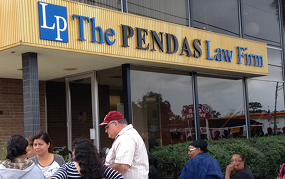
Florida’s personal injury framework is built on a foundation of comparative fault principles, mandatory insurance requirements, and strict statutory deadlines that collectively determine whether an injured person recovers nothing, something, or the full measure of their damages. For anyone hurt in an accident in this state, Florida personal injury law governs every aspect of the legal process, from the first insurance claim filed after a crash to a jury verdict in a circuit court. Florida injury lawyers at The Pendas Law Firm has spent years representing personal injury and accident victims across state, developing the kind of case-specific knowledge that separates effective advocacy from generic legal assistance.
How Florida’s Modified Comparative Fault Standard Actually Works Against Injured People
In 2023, Florida shifted from a pure comparative fault system to a modified comparative fault standard under Section 768.81 of the Florida Statutes. This change was significant. Under the previous rule, an injured person who was 90% at fault for their own accident could still recover 10% of their damages from a defendant. Under the current law, if a plaintiff is found to be more than 50% responsible for the incident that caused their injuries, they are completely barred from recovery. That single change reshaped the litigation landscape in ways that still affect how cases are evaluated, negotiated, and tried.
What this means practically is that insurance adjusters and defense attorneys now have a direct financial incentive to push fault onto the injured party. Shifting responsibility above the 50% threshold eliminates their exposure entirely. Recognizing this dynamic early, before recorded statements are given and before evidence disappears, is one of the most important reasons to have experienced legal representation in place from the first days following an accident.
The No-Fault Insurance System, PIP Coverage, and When You Can Step Outside It
Florida requires drivers to carry Personal Injury Protection coverage, commonly called PIP, which pays 80% of reasonable medical expenses and 60% of lost wages up to $10,000, regardless of who caused the accident. The no-fault system was designed to speed up compensation for minor injuries, but it creates a threshold that must be crossed before an injured person can pursue a tort claim directly against the at-fault driver. That threshold requires the injured person to have suffered a “serious injury,” defined under Florida Statute Section 627.737 as significant and permanent loss of an important bodily function, permanent injury within a reasonable degree of medical probability, significant and permanent scarring or disfigurement, or death.
The serious injury threshold is where many claims get contested. Insurance companies routinely dispute whether an injury qualifies, and the determination often hinges on how well a treating physician documents the permanency and significance of the condition. Gaps in medical treatment, inconsistent records, and delayed diagnoses can all be used to argue that no threshold injury exists. Building the medical record from day one, in a way that supports the legal threshold, is a strategic function that attorneys at The Pendas Law Firm approach with the same attention they bring to courtroom preparation.
For those whose injuries do meet the threshold, the full range of tort damages becomes available: past and future medical expenses, lost earning capacity, pain and suffering, emotional distress, and loss of enjoyment of life. These non-economic damages are often the largest component of a serious injury claim, and they require compelling, well-documented presentation to maximize recovery.
Florida’s Statute of Limitations and the Consequences of Missing the Deadline
Florida reduced its personal injury statute of limitations from four years to two years, effective March 24, 2023, under HB 837. This means most personal injury claimants now have two years from the date of injury to file a lawsuit in circuit court. Missing this deadline, with very limited exceptions, results in permanent loss of the right to sue, regardless of how strong the underlying claim might be.
There are specific tolling provisions that can extend the deadline in narrow circumstances, such as when the injured person is a minor or when fraud concealed the injury. Medical malpractice claims carry their own separate limitations period under Section 95.11(4)(b) and involve pre-suit notice requirements and screening panels that add procedural layers not present in standard negligence cases. Wrongful death claims under the Florida Wrongful Death Act must generally be filed within two years of the date of death. These deadlines are not suggestions, and courts apply them strictly.
Where Florida Personal Injury Cases Are Filed and How They Proceed Through the Courts
Personal injury cases in Florida are filed in the circuit court for the county where the accident occurred or where the defendant resides. In Miami-Dade County, cases are heard at the Richard E. Gerstein Justice Building. Broward County cases proceed through the Broward County Courthouse in Fort Lauderdale. Orange County cases are heard at the Orange County Courthouse in Orlando, and Hillsborough County cases are handled at the Edgecomb Courthouse in Tampa. Each circuit has its own local administrative orders, case management procedures, and judicial assignment practices that influence how cases are litigated and resolved.
After a complaint is filed, the case enters a structured pretrial process involving service of process, the defendant’s responsive pleadings, written discovery, depositions, and expert disclosure. Florida Rule of Civil Procedure 1.650 governs mediation, which is mandatory in most civil cases before trial. The overwhelming majority of personal injury cases resolve at mediation or through direct negotiation before a jury ever hears them. When a case does go to trial, Florida juries of six members, with a unanimous verdict required in civil cases, decide both liability and damages. The Pendas Law Firm prepares every case with trial as a realistic endpoint, which consistently produces better pre-trial outcomes because opposing parties know the firm will not back down.
What Damages Are Actually Recoverable Under Florida Law
One of the most consequential changes in Florida’s 2023 tort reform package was the elimination of one-way attorney’s fees in most insurance disputes, along with significant limits on medical damages. Under the revised statute, prevailing plaintiffs in personal injury cases can no longer recover the full billed amount for medical treatment if the provider accepted a lower contracted rate. This means the damages calculation in cases involving health insurance or Medicare coverage has become more complex, and the gap between what was billed and what is actually recoverable has narrowed in many scenarios.
Non-economic damages, meaning compensation for pain, suffering, mental anguish, and loss of enjoyment of life, remain fully available in cases that cross the serious injury threshold. Punitive damages are available under Section 768.72 when there is clear and convincing evidence of intentional misconduct or gross negligence, though they require court approval to plead and carry a cap of three times compensatory damages in most circumstances. Understanding how these caps and limitations interact with the specific facts of a claim is where legal strategy directly affects the size of a recovery.
The Types of Accidents and Injuries That Drive Florida Personal Injury Claims
Florida’s roads, waterways, construction sites, and commercial properties produce a wide range of cases that fall under the state’s personal injury framework. Car accidents remain the single largest source of claims, followed closely by truck accidents on corridors like I-95, I-75, and the Florida Turnpike where commercial freight traffic is constant. Motorcycle accidents spike during tourist season and bike weeks, while bicycle accidents and pedestrian accidents are disproportionately common in urban areas where infrastructure has not kept pace with population growth. Bus accidents involving public transit systems, private charter operators, and school buses add another layer of complexity because of sovereign immunity issues and commercial carrier regulations.
Rideshare services have introduced their own category of litigation across the state. Rideshare accidents involving Uber and Lyft drivers require navigating tiered insurance policies that shift depending on whether the driver was actively carrying a passenger, waiting for a ride request, or offline at the time of the collision. Florida’s waterways generate a steady volume of boat accidents, and the state’s extensive coastline and port activity bring maritime injury claims governed by federal admiralty law, the Jones Act, and the Longshore and Harbor Workers’ Compensation Act. Cruise ship injuries originating from ports in Miami, Fort Lauderdale, Tampa, and Port Canaveral involve their own jurisdictional challenges and contractual limitations that differ significantly from standard Florida negligence claims.
On land, construction accidents remain a persistent source of serious injuries as the state’s building boom continues, with falls, crane accidents, electrocution injuries, and heavy equipment accidents occurring on job sites from Jacksonville to the Keys. Work accidents and work injuries that fall outside the construction context raise questions about whether workers’ compensation is the exclusive remedy or whether a third-party negligence claim exists. Premises liability cases, including slip and fall injuries on commercial property and negligent security claims at hotels, apartment complexes, and nightlife venues, form another substantial portion of the firm’s caseload.
Product liability claims in Florida apply strict liability principles when a defective consumer product, vehicle component, or medical device causes harm. Nursing home abuse and neglect cases have increased as the state’s aging population grows, and dog bite claims fall under Florida’s strict liability statute, which holds owners responsible regardless of whether the animal had a prior history of aggression. Birth injuries caused by preventable obstetric errors raise some of the most complex damages questions in personal injury law, often involving lifetime care cost projections that extend decades into the future.
Catastrophic and Life-Altering Injuries Under Florida Law
Cases involving catastrophic injuries demand a fundamentally different approach to damages calculation and litigation strategy. Traumatic brain injuries may leave victims with permanent cognitive deficits that require years of neuropsychological evaluation to fully document. Spinal cord injuries resulting in partial or complete paralysis carry lifetime medical costs that frequently exceed several million dollars when accounting for adaptive equipment, home modifications, attendant care, and ongoing rehabilitation. Burn injuries from industrial accidents, vehicle fires, or defective products often involve prolonged hospitalization, multiple surgeries, and permanent disfigurement that profoundly affects a person’s earning capacity and quality of life.
Accidents Unique to Florida’s Landscape and Tourism Economy
Florida’s position as the nation’s top tourism destination produces categories of injury claims that are less common elsewhere. Amusement park injuries and theme park injuries in the Orlando corridor raise questions about operator duty of care and the limited regulatory oversight that applies to certain attractions. Swimming pool accidents and drowning accidents are tragically frequent in a state where residential and resort pools are nearly universal, and beach injuries from hazardous conditions, rip currents, and unguarded waterfront areas affect both residents and visitors. Water sport injuries from jet ski collisions, parasailing failures, and other recreational activities on Florida’s coasts and inland waterways add further complexity when multiple operators, rental companies, and property owners share potential liability.
Transportation-related claims extend well beyond standard vehicle collisions. Golf cart accidents are increasingly common in retirement communities and resort areas across the state. E-scooter accidents and scooter accidents have surged in urban centers where rental fleets operate on streets that were not designed for mixed micro-mobility traffic. ATV accidents on rural properties and unregulated trails raise their own liability questions under Florida’s recreational use statute. Train accidents and railroad crossing accidents occur with disturbing regularity along Brightline’s high-speed corridor and the state’s extensive freight rail network. Boating under the influence accidents combine criminal enforcement with civil liability in ways that can substantially strengthen an injured party’s claim for damages.
Additional Legal Claims Florida Injury Victims Should Know About
Beyond the core negligence framework, several specialized areas of Florida law provide additional avenues for recovery. Insurance bad faith claims, while significantly limited by HB 837, remain available when an insurer’s conduct in handling a claim rises to the level of bad faith under Florida’s remaining statutory and common law standards. Dram shop liability allows victims injured by intoxicated individuals to pursue claims against the establishments that served alcohol to a person who was habitually addicted or underage. Assault and battery victims can pursue civil claims independent of any criminal prosecution, recovering damages that the criminal justice system cannot provide. Sexual abuse survivors benefit from extended statutes of limitations under Florida law that recognize the delayed nature of trauma disclosure.
For cases involving defective pharmaceuticals, contaminated products, or widespread corporate negligence affecting large groups of people, mass tort and class action litigation provides a mechanism for collective legal action. Toxic exposure claims from industrial contamination, hazardous building materials, or environmental pollution involve complex causation issues that require specialized expert testimony. Workers who are unable to return to their previous employment due to permanent injury may also have grounds for a Social Security disability claim in addition to their personal injury case, and an auto accident that involves an uninsured or underinsured motorist requires a different strategic approach to maximize the available recovery.
Answers to Real Questions Florida Accident Victims Ask
Do I have to use my own PIP insurance even if the other driver caused the accident?
Yes. Florida’s no-fault system requires your own PIP coverage to pay your initial medical expenses and lost wages regardless of fault. You pursue a claim against the at-fault driver only if your injuries meet the statutory serious injury threshold.
What happens if the at-fault driver had no insurance?
Florida requires drivers to carry $10,000 in property damage liability coverage but not bodily injury liability coverage. If the at-fault driver has no bodily injury coverage, your uninsured motorist policy, if you have one, becomes the primary source of recovery. UM coverage in Florida is critically important and frequently underutilized.
Can I still recover damages if I was partially at fault?
Yes, as long as you were not more than 50% at fault. Your recovery is reduced proportionally to your percentage of fault. A plaintiff found 30% responsible for a $100,000 claim recovers $70,000.
How long do most Florida personal injury cases take to resolve?
Straightforward cases with clear liability and documented injuries often resolve within six to twelve months. Cases involving disputed fault, catastrophic injuries, or complex insurance issues commonly take two to three years, particularly if they proceed to trial.
Is it true that Florida recently changed the rules about suing insurance companies?
Yes. HB 837 eliminated the assignment of benefits and bad faith litigation tools that plaintiffs had previously used to hold insurers accountable. These changes shifted leverage toward insurance companies, which makes retaining experienced counsel earlier in the claims process more important, not less.
What should I do immediately after an accident to protect my claim?
Seek medical treatment within 14 days to preserve your PIP benefits. Report the accident to law enforcement. Document the scene, get witness contact information, and avoid giving recorded statements to any insurance company before speaking with an attorney.
Florida Communities Where The Pendas Law Firm Represents Accident Victims
The Pendas Law Firm serves injured clients across the full stretch of Florida, from the Gulf Coast through Central Florida and down into South Florida. The firm handles cases arising from accidents in Tampa and the surrounding communities of Clearwater, St. Petersburg, and Bradenton, as well as throughout the Orlando metro area including Kissimmee and Sanford. In South Florida, the firm represents clients from Miami and Miami Beach through Fort Lauderdale and Boca Raton, and northward through West Palm Beach. Jacksonville and the surrounding communities of Duval and Clay Counties are also within the firm’s service area, as are mid-state communities like Ocala and Gainesville. Whether an accident happened on I-4 near the Millenia area of Orlando, on I-75 through Hillsborough County, or on US-1 through Broward, the firm’s attorneys are familiar with the roads, courts, and insurance practices that will determine how a case unfolds.
The firm also represents accident victims on the Gulf Coast in Fort Myers, Naples, and Sarasota, along the Space Coast through Melbourne and Daytona Beach, and in communities across the Panhandle including Tallahassee and Pensacola. Cases from the Florida Keys, including Key West, often involve maritime, boating, and tourism-related injuries that require familiarity with both state and federal jurisdiction. Wherever in Florida the accident occurred, The Pendas Law Firm’s attorneys understand the local courts, the regional insurance practices, and the procedural requirements that apply.
Early Representation Changes the Outcome in Florida Injury Cases
The window between an accident and the first contact with an insurance adjuster is often where claims are won or lost. Adjusters are trained to gather information that limits exposure, and statements made without legal guidance frequently resurface to undermine a claim at mediation or trial. Retaining The Pendas Law Firm immediately after an accident means evidence is preserved while it still exists, medical treatment is documented in a way that supports the legal threshold, and the insurance company knows from day one that it is dealing with attorneys who litigate. That posture, established early, consistently produces better results than entering negotiations after months of unrepresented contact with the insurer.
Contact Our Skilled Florida Injury Attorneys
For anyone seriously hurt in an accident anywhere in Florida, the time to reach out to a Florida personal injury attorney is now, before the claim takes a direction that is difficult to correct. Contact The Pendas Law Firm to schedule a free case evaluation and let the firm’s attorneys assess what your claim is actually worth under current Florida law.