

Wet Leaves and Loss-of-Control Car Accidents in Seattle
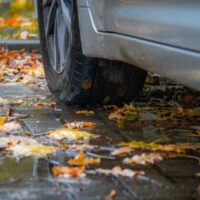
Seattle’s autumn weather creates driving hazards that are easy to underestimate. As rain soaks fallen leaves, wet foliage can make pavement dangerously slippery, especially on hills, curves, and streets where trees overhang the roadway. Drivers who encounter these conditions may suddenly lose traction, slide through intersections, or collide with vehicles they cannot stop in time to avoid.
When these accidents happen, the explanation often centers on the weather. A driver may insist that wet leaves caused the vehicle to skid and that nothing could have prevented the collision. However, Washington law requires motorists to adjust their driving to account for hazardous road conditions. Wet leaves do not automatically excuse a driver who was traveling too fast, following too closely, or operating a poorly maintained vehicle.
Determining what caused a loss-of-control accident requires examining both the roadway and the driver’s conduct. A Seattle car accident lawyer can investigate whether the collision resulted from negligent driving, inadequate roadway maintenance, or a combination of factors that contributed to the injuries.
Why Wet Leaves Can Make Seattle Roads Dangerous
Wet leaves create a particular problem because they interfere with the contact between vehicle tires and the pavement. When rain saturates fallen leaves, the resulting layer can become extremely slippery, reducing the friction needed for braking, steering, and maintaining control through turns.
The Washington State Department of Enterprise Services warns that wet leaves can become as slick as ice, increasing stopping distances and making sudden maneuvers more dangerous. Accumulated leaves can also conceal road markings, potholes, and other surface hazards.
These conditions are especially concerning on Seattle’s hills. A driver descending a residential street in Queen Anne or Beacon Hill may already need additional braking distance because of the grade. If wet leaves cover the pavement near an intersection, the available traction may be insufficient for a sudden stop.
Similar problems arise around curves and intersections in neighborhoods with mature trees, including Capitol Hill and parts of North Seattle. Leaves may accumulate along curbs, near storm drains, or where vehicles repeatedly push debris into the same portion of the roadway.
The danger is not limited to the moment a vehicle begins sliding. Once traction is lost, the driver may have little ability to correct the vehicle’s direction before striking another car, a pedestrian, or a fixed object.
Washington Law Requires Drivers to Reduce Speed for Road Conditions
One of the most important legal questions following a wet-leaf accident is whether the driver was traveling at a reasonable speed for the conditions.
Under RCW 46.61.400, Washington drivers must operate their vehicles at speeds that are reasonable and prudent in light of existing hazards. The statute also requires drivers to reduce speed when weather, roadway conditions, curves, or other circumstances create additional danger.
This requirement applies even when a driver is traveling below the posted speed limit. For example, a motorist approaching an intersection at 25 mph might ordinarily have sufficient distance to stop. That same speed could become unsafe when wet leaves cover the pavement, and the driver approaches downhill traffic.
The posted speed limit does not establish that the driver was traveling safely. Investigators may instead examine whether the driver had enough time to recognize the conditions, slow down, and maintain control.
Visibility also matters. A thick layer of leaves covering an intersection may be apparent from a considerable distance, particularly during daylight hours. A driver who continues toward that intersection without slowing may have difficulty arguing that the subsequent loss of traction was entirely unexpected.
However, the analysis can change when a dangerous patch is concealed or appears so suddenly that a reasonably careful driver would have had little opportunity to respond. The relevant question is whether the driver acted reasonably under the circumstances leading up to the collision.
How Braking and Following Distance Contribute to Loss-of-Control Accidents
A driver may be able to travel across wet leaves without immediately losing control. Problems frequently develop when the driver needs to brake, accelerate, or change direction.
Abrupt braking can overwhelm the limited traction available on a slippery surface. A vehicle may then slide forward even though the driver has pressed the brake pedal. Sudden steering adjustments can also cause the vehicle to move sideways or leave its intended path.
These risks make following distance especially important. Under RCW 46.61.145, motorists must maintain a reasonable and prudent distance behind other vehicles, considering traffic speed and highway conditions.
A driver following too closely on a wet, leaf-covered street may not have enough distance to stop safely when traffic slows. If the vehicle ahead brakes for a crosswalk or intersection, the trailing driver may skid into its rear bumper.
In that situation, the wet leaves may explain why the vehicle could not stop, but they do not necessarily excuse the driver for failing to leave adequate stopping distance.
Investigators may consider when the driver began braking, whether the vehicle was already traveling too fast, and whether a more gradual response could have prevented the collision. These details help distinguish an unavoidable loss of traction from an accident involving preventable driver conduct.
Worn Tires Can Make Wet-Leaf Accidents More Likely
A vehicle’s mechanical condition is another important part of the liability analysis. Even a careful driver may struggle to maintain control when tires are worn, improperly inflated, or otherwise unsuitable for slippery conditions.
Tire tread helps maintain traction on wet pavement by channeling water away from the contact area. As tread wears down, a tire’s ability to maintain contact with the road can deteriorate.
Washington addresses this concern through RCW 46.37.425, which requires vehicles to have tires in safe operating condition. The statute identifies several unsafe tire conditions, including tread depth below 2/32 of an inch under its specified measurement criteria.
Meeting that minimum does not guarantee adequate traction in every situation. A tire that technically satisfies the legal requirement may still perform poorly in heavy rain or on a slippery layer of leaves.
Brake condition, tire pressure, and maintenance history may also matter. When a driver claims that the vehicle suddenly became uncontrollable, an investigation should consider whether an existing mechanical problem contributed to that loss of control.
Evidence of worn tires or defective brakes does not automatically establish negligence. It must be connected to the collision. However, documented maintenance problems can undermine an argument that weather alone made the accident unavoidable.
When Repeated Leaf Accumulation Raises Roadway Maintenance Questions
Most wet-leaf accidents primarily involve questions about driver conduct. In some circumstances, however, roadway conditions may raise additional maintenance concerns.
Seattle’s Department of Transportation conducts seasonal leaf removal and street sweeping to help prevent drainage problems and keep streets usable during wet weather. The city also encourages residents to report debris, flooding, and other hazards affecting public roads.
These activities recognize that accumulated leaves can become a recurring maintenance concern, particularly where runoff carries debris into drainage areas or heavy foliage repeatedly covers the roadway.
A single accumulation of leaves after a storm does not automatically establish government liability. Washington municipalities generally have a duty to maintain roads in a condition reasonably safe for ordinary travel, but claims involving hazards they did not create ordinarily require proof that the government had notice of the dangerous condition and a reasonable opportunity to address it.
The Washington Court of Appeals addressed these principles in Paisley v. City of Seattle, which involved an unusually slippery roadway on the former Alaskan Way Viaduct. The court emphasized the importance of showing that the city knew, or should have known, about the specific hazard and had enough time to respond.
Why Recurring Accumulation May Matter
Suppose wet leaves repeatedly collect at the bottom of a steep street, covering part of an intersection after every significant rainfall. Residents have reported the condition several times, and previous vehicles have experienced problems at the same location.
Those circumstances could support an investigation into whether the responsible road agency had sufficient notice of a dangerous condition and failed to respond reasonably.
Maintenance records, prior complaints, photographs, street-sweeping schedules, and earlier collision reports may help establish how long the problem existed and what steps were taken to address it.
The responsible agency’s identity also matters. Depending on the road, maintenance responsibilities may belong to the City of Seattle, another local government, or a state agency.
Even where roadway maintenance contributed to a crash, the driver’s independent duty to operate safely remains relevant. Responsibility may involve multiple parties rather than a single cause.
When an Insurance Company Blames the Weather
After a loss-of-control accident, an insurance company may argue that the collision resulted from circumstances beyond the insured driver’s control.
The insurer may point to heavy rain, slippery leaves, poor visibility, or unexpected changes in traction. These conditions are relevant, but they do not answer every question about fault.
Rain and falling leaves are familiar seasonal conditions in Seattle. Drivers are generally expected to recognize the associated risks and adjust their speed and following distance accordingly.
An investigation may reveal that the driver entered a curve too quickly, waited too long to brake, or attempted a sudden maneuver that would have been dangerous on the affected roadway.
Other evidence may support the driver’s explanation. A concealed hazard, an unexpected obstruction, or an abrupt change in roadway conditions could have contributed to an accident despite reasonable precautions.
Washington’s comparative fault law also matters when several factors contributed to a collision. Under RCW 4.22.005, an injured person’s compensation may be reduced in proportion to their own share of fault, but partial fault does not automatically prevent recovery.
For example, if the evidence shows that one driver was following too closely while another made an unsafe maneuver, both actions may be considered when responsibility is allocated.
An insurance company’s conclusion that weather caused the accident should therefore be examined alongside the evidence of how each driver behaved before losing control.
Evidence That Can Establish What Caused a Wet-Leaf Accident
Evidence from the accident scene can be particularly important because leaf accumulation and roadway conditions may change quickly. Rain may wash debris away, maintenance crews may clear the street, and other vehicles may scatter the leaves before an investigation begins.
Photographs showing the roadway, leaf coverage, vehicle positions, and nearby drainage conditions can help document what existed at the time of the collision. Images taken from the direction each driver approached may also help establish whether the hazard was visible.
Witness statements, nearby surveillance footage, and dashcam recordings may provide evidence about vehicle speed, braking, and steering movements. In a serious injury accident, available electronic vehicle data and accident reconstruction analysis may help clarify the sequence of events.
Vehicle inspections can document tire tread depth, inflation, and relevant mechanical defects. When roadway maintenance is disputed, records of previous complaints, sweeping activity, and reported hazards may also become important.
The evidence must connect the conditions to the actual collision. A photograph showing leaves somewhere near the scene, for example, does not necessarily prove that the leaves caused a particular vehicle to skid.
Medical documentation is equally important to the injury claim. Emergency treatment records, diagnostic imaging, rehabilitation notes, and employment records can help establish the physical and financial consequences of the accident.
These materials may be especially significant when an injured person experiences continuing pain, limited mobility, missed work, or other complications following a loss-of-control collision.
Compensation and Filing Deadlines After a Seattle Car Accident
When another driver’s negligence contributes to a wet-leaf accident, an injured person may be entitled to compensation for medical expenses, lost wages, reduced earning capacity, property damage, and pain and suffering.
The available compensation depends on the evidence establishing liability and the extent of the injuries. Serious collisions may involve substantial rehabilitation expenses and continuing limitations that affect the injured person’s ability to work or manage daily activities.
Washington generally provides a three-year limitations period for personal injury lawsuits under RCW 4.16.080, subject to applicable exceptions.
Claims involving public roadway maintenance require additional attention to procedural rules. For example, RCW 4.96.020 establishes a claim-presentment process for local government defendants and generally requires a 60-calendar-day waiting period after presenting the claim before filing suit. Claims against state agencies have separate statutory requirements.
Because photographs, witness accounts, and maintenance information may become harder to obtain over time, an early investigation can be especially valuable when the precise cause of a collision is disputed.
Contact Our Seattle Car Accident Lawyers at The Pendas Law Firm
A collision involving wet leaves can leave you facing painful injuries, vehicle damage, medical expenses, and uncertainty about who should be responsible. A driver losing traction does not necessarily mean the accident was unavoidable. Speed, braking decisions, tire condition, and roadway maintenance may all help explain why the collision happened.
The Pendas Law Firm represents people injured in car accidents throughout Seattle and the surrounding communities. Our attorneys can investigate the circumstances of a loss-of-control accident, address disputes over driver negligence and roadway conditions, and pursue compensation for the harm you have suffered. Contact The Pendas Law Firm today for a free consultation about your accident and the options available under Washington law.
Sources:
- Washington State Department of Enterprise Services https://content.govdelivery.com/accounts/WADES/bulletins/42c098c
- Washington State Legislature —RCV 46.61.400; RCW 46.61.145; RCW 46.37.425 https://app.leg.wa.gov/rcw/default.aspx?cite=46.61.400
https://app.leg.wa.gov/rcw/default.aspx?cite=46.61.145
https://app.leg.wa.gov/rcw/default.aspx?cite=46.37.425
- National Highway Traffic Safety Administration–TireWise https://www.nhtsa.gov/vehicle-safety/tires
- Washington Court of Appeals — Paisley v. City of Seattle (2005) https://law.justia.com/cases/washington/court-of-appeals/2005/127-wash-app-1016-1.html
- Washington State Legislature —RCW 4.22.005; RCW 4.16.080; RCW 4.96.020; RCW 4.92.100.
https://app.leg.wa.gov/rcw/default.aspx?cite=4.22.005;
https://app.leg.wa.gov/rcw/default.aspx?cite=4.16.080;
https://app.leg.wa.gov/rcw/default.aspx?cite=4.96.020;
https://app.leg.wa.gov/rcw/default.aspx?cite=4.92.100