

Port Drayage Truck Accidents When the Liability Chain Begins at the Terminal
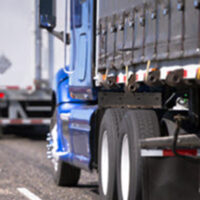
A container truck leaving a Seattle marine terminal may appear to be a single vehicle operated by a single driver. The equipment and business relationships behind that truck can tell a very different story. The tractor may belong to an owner-operator, the driver may be hauling for a motor carrier, and the container may be sitting on a chassis supplied and maintained by another company. The cargo inside may have passed through still more hands before the truck reaches a public road.
Those relationships become important when a mechanical problem, unstable container, or other terminal-related condition contributes to a serious injury accident. An experienced Seattle truck accident lawyer can trace the container’s movement back through the terminal interchange before important equipment and operating records disappear.
Seattle gives these cases a strong local dimension. East Marginal Way South carries substantial freight traffic between marine terminals, rail facilities, industrial businesses, and the regional highway system. Seattle transportation officials describe it as a major freight corridor and critical last-mile connection. WSDOT also identifies SR 509 as an important freight link between the Port of Seattle and warehouse, distribution, and industrial centers in King County. A crash along one of these routes may have started with decisions made before the truck entered traffic.
A Drayage Truck Accident May Begin Inside the Terminal
Drayage commonly involves relatively short truck movements connecting marine terminals with rail yards, container yards, warehouses, and distribution facilities. A driver may arrive at the terminal with a tractor, connect to an intermodal chassis carrying a container, complete the interchange process, and then head toward another facility.
That handoff creates an important dividing line in a truck accident investigation. A brake failure several miles from the terminal, for example, does not automatically establish that the driver neglected the truck. Investigators need to determine which brakes failed, who controlled the equipment, and what was known about its condition before departure.
The same issue can arise with tires, lighting, coupling components, container securement, or structural problems involving the chassis itself. A police report prepared at the crash scene may identify the truck driver and motor carrier without explaining where the chassis originated or who was responsible for maintaining it.
Chassis Providers Have Their Own Safety Responsibilities
Intermodal chassis are particularly important because federal trucking regulations impose duties directly on intermodal equipment providers. Under 49 C.F.R. § 390.40, a provider must systematically inspect, repair, and maintain equipment intended for interchange with motor carriers and provide that equipment in safe operating condition. Providers must also maintain inspection and maintenance records and have procedures for addressing defects identified during pre-trip inspections.
Federal regulations also establish a process for reporting chassis defects. 49 C.F.R. § 396.12 requires intermodal equipment providers to maintain a system for receiving reports of defects that could affect safe operation or cause a mechanical breakdown. Reported safety defects generally must be repaired, or determined not to require repair, before the equipment returns to service. The regulation requires the provider to retain the relevant report and repair documentation for three months.
Those records can change the direction of a personal injury claim. A prior report involving the same chassis could show that a defect existed before the accident. Repeated repairs to the same component may raise different questions than a failure that appeared without warning.
The Driver and Motor Carrier Still Have Separate Duties
Responsibility for a chassis does not end with the equipment provider. Federal rules require a driver accepting intermodal equipment to inspect designated components before operating it on a public road and to be satisfied that those components are in good working order. Drivers and motor carriers also have responsibilities for reporting known defects back to the provider.
That creates room for disputed liability after a crash. A chassis provider may argue that an obvious defect should have been discovered during the pre-trip inspection. The motor carrier may contend that the failed component was not something a driver could reasonably detect at the terminal. Inspection records, photographs, repair histories, and testimony about the condition of the equipment at interchange can help resolve that dispute.
The tractor itself requires a separate investigation. Its owner may be different from both the motor carrier and the chassis provider. Maintenance records for the tractor can reveal problems involving its brakes, steering, tires, or coupling equipment that have nothing to do with the chassis supplied at the port.
Terminal Operations Can Become Part of the Liability Investigation
A container does not simply appear on a chassis ready for the highway. Terminal operations involve moving containers through the yard, placing them onto chassis, directing trucks through designated areas, and managing the interchange before a driver exits the gate.
Problems during those operations can carry onto the public road. Northwest Seaport Alliance terminal safety rules, for example, instruct drivers not to move until a container has been placed on the chassis and the handling equipment has cleared it. Those rules also require that a container not properly seated on the chassis be returned for reseating before the truck leaves the terminal.
If evidence suggests that a container was improperly seated, equipment was damaged during handling, or a known problem was allowed through the gate, the terminal operator or contractor involved in the movement may need closer scrutiny. Liability depends on what actually occurred, not merely on the fact that the truck was involved in the collision.
Cargo Interests May Also Have a Role in the Crash
The contents of a sealed container can affect the way a truck handles once it begins moving. Poor weight distribution or cargo that shifts significantly during transit can destabilize the combination, particularly during braking, cornering, or an emergency maneuver.
The driver may have limited ability to see how cargo inside a sealed container was loaded. If evidence connects the accident to the condition of the shipment, attention can turn to the company that loaded, packed, or prepared the container. Bills of lading, weight records, shipping instructions, loading documents, and communications related to the shipment can help establish where responsibility lies.
Cargo involvement should be based on evidence rather than assumption. A rollover near the port does not automatically mean the container was loaded incorrectly. Reconstruction evidence can help distinguish between excessive speed, steering input, chassis failure, load movement, and other forces that contributed to the loss of control.
Seattle Freight Corridors Can Extend the Investigation Far Beyond the Port Gate
East Marginal Way is one of Seattle’s most important connections between maritime terminals, SODO rail yards, industrial businesses, and the regional highway network. Seattle has invested heavily in the corridor precisely because of the volume and weight of freight traffic moving through it.
Port-related truck movements also extend south toward warehouse and distribution areas throughout King County. WSDOT describes the SR 509 Completion Project as creating critical freight connections between the Port of Seattle and major distribution, warehouse, and industrial centers. A drayage collision can therefore occur several miles from the marine terminal while still carrying evidence tied directly to the original terminal interchange.
The location of the crash should not artificially limit the investigation. Dispatch information, terminal gate records, interchange documents, GPS data, and equipment identification numbers can reconstruct where the tractor, chassis, and container came together before the accident.
Washington Law Makes Identifying Each Responsible Entity Important
Washington law specifically addresses accidents involving fault by more than one entity. Under RCW 4.22.070, the trier of fact generally determines the percentage of total fault attributable to each entity that caused the claimant’s damages. The statute also contains important rules governing several and joint liability in particular circumstances.
That framework makes the identity of every potentially responsible company especially important in a port drayage accident. Focusing exclusively on the driver could leave a chassis provider, motor carrier, tractor owner, terminal contractor, or another entity outside the claim even though its conduct contributed to the collision.
A serious injury accident may leave a victim facing extensive medical treatment, lost wages, reduced earning capacity, and lasting physical limitations. Establishing fault across the complete transportation chain can affect the compensation available for those losses.
Evidence From the Terminal Can Disappear Quickly
Drayage cases generate records that ordinary car accidents do not. The chassis has an identifying number. The terminal records its movement. The interchange can produce inspection or defect information. Motor carriers maintain dispatch and trip records, while electronic systems may document the tractor’s route after leaving the gate.
Some of that evidence is subject to relatively short retention practices or regulatory periods. Federal regulations, for example, require intermodal equipment providers to retain certain submitted defect-and-repair documentation for 3 months. Waiting too long to investigate can make it much harder to determine what condition the equipment was in when it left the terminal.
For someone seriously injured in a port-related collision, working with a Seattle truck accident lawyer can help determine whether the crash began with a mechanical or operational failure before the driver entered the freight corridor.
Contact Our Seattle Truck Accident Lawyers at The Pendas Law Firm
A port drayage truck accident can leave an injured person dealing with serious medical problems while several transportation companies begin protecting their own interests. Determining responsibility may require looking beyond the driver and examining how the tractor, chassis, container, and shipment came together before the collision.
At The Pendas Law Firm, our Seattle truck accident lawyer can investigate the companies and equipment involved in the drayage movement and pursue compensation from those responsible for your injuries and losses. Contact us today for a free consultation and learn how we can help protect your rights after a serious truck accident.
Sources:
Electronic Code of Federal Regulations — 49 C.F.R. Part 390, Subpart C, Requirements for Intermodal Equipment Providers and Motor Carriers Operating Intermodal Equipment
Electronic Code of Federal Regulations — 49 C.F.R. § 396.12, Procedures for Intermodal Equipment Provider Defect Reports
Washington State Legislature — RCW 4.22.070, Percentage of Fault and Liability
Seattle Department of Transportation — East Marginal Way Corridor Improvement Project
Washington State Department of Transportation — SR 509 Completion Project
Northwest Seaport Alliance — Terminal Safety Rules