

Seattle Motorcycle Accidents When Drivers Pull Out From Between Parked Cars
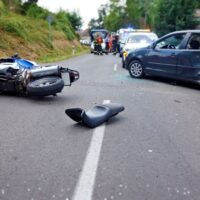
Seattle’s busy neighborhood streets can present serious hazards for motorcyclists, particularly where rows of parked vehicles obstruct a driver’s view of approaching traffic. A driver attempting to leave a parking space, driveway, or alley may pull into the roadway without realizing that a motorcycle is approaching. By the time the rider sees the vehicle entering the lane, there may be too little room to stop or maneuver around it.
These accidents can leave motorcyclists with broken bones, head injuries, road rash, and other serious injuries. Determining fault often requires examining what each person could see before the collision and whether the driver had a reasonable opportunity to identify the approaching motorcycle. An experienced Seattle motorcycle accident lawyer can investigate the obstructed sightlines, vehicle movements, and physical evidence to determine whether the driver failed to yield or entered traffic without adequate visibility.
How Parked Vehicles Create Dangerous Blind Spots for Motorcyclists
In Seattle neighborhoods such as Capitol Hill, Ballard, and the University District, curbside parking is common along streets with steady vehicle, bicycle, and pedestrian traffic. Larger SUVs, delivery vans, and trucks can obstruct a driver’s view when they attempt to enter the roadway from a parking space or driveway.
Consider a driver preparing to pull into traffic from a parking space between two larger vehicles. The driver may look toward approaching traffic but see only the sides of the parked vehicles. As the car moves forward, its front bumper can enter the travel lane before the driver has a clear view of an approaching motorcycle.
The situation becomes particularly dangerous when the driver assumes the road is clear simply because no vehicle was visible from the original stopping position. A motorcyclist traveling within the speed limit may suddenly encounter a car emerging directly into the motorcycle’s path.
The narrow profile of a motorcycle can complicate visibility, but its smaller size does not eliminate the driver’s obligation to check for approaching traffic. The central issue is whether the driver entered the roadway before establishing that the movement could be completed safely.
Did the Driver Have an Opportunity to See the Approaching Motorcycle?
One of the most important questions in these motorcycle accident claims is when the driver could first have seen the rider. That moment may be different from when the driver actually noticed the motorcycle.
Investigators may examine the driver’s position before pulling forward, the height and location of surrounding parked vehicles, and the angle from which the motorcycle approached. They also consider whether the driver could have improved visibility by stopping at a different position before proceeding farther into the lane.
For example, a driver emerging between parked vehicles might need to advance slowly toward the edge of the parking lane to obtain a better view. However, moving forward to see approaching traffic must still be done with reasonable care. Continuing into the travel lane without checking whether it is occupied may create an unreasonable collision risk.
The driver’s testimony can help establish the sequence of events, although statements such as “I never saw the motorcycle” do not necessarily resolve liability. Investigators must determine whether the motorcycle was hidden throughout the maneuver or became visible while the driver still had an opportunity to stop.
Identifying the First Clear Line of Sight
Visibility analysis can involve reconstructing the positions of both vehicles immediately before the crash. Photographs, street measurements, vehicle dimensions, and camera recordings may help establish when the motorcycle first entered the driver’s unobstructed field of view.
The analysis should distinguish between the driver’s ability to see the motorcycle and the motorcyclist’s opportunity to recognize the emerging car. Those visibility windows may begin at different moments.
A driver might have been able to see the motorcycle before the rider could see the car’s front end extending beyond the parked vehicles. Alternatively, a rider may have observed the emerging vehicle from a greater distance but lacked sufficient time to avoid the collision.
These distinctions can substantially affect how fault is assigned.
How Motorcycle Speed and Lane Position Affect Fault
Insurance companies frequently examine a motorcyclist’s speed after a collision involving a vehicle entering traffic. Speed can be relevant because it affects how quickly a motorcycle closes the distance to an emerging vehicle and how much time the rider has to react.
However, an allegation of speeding should be supported by evidence. The severity of a motorcycle crash does not, by itself, establish that the rider exceeded the speed limit.
Seattle generally has a 20 mph default speed limit on non-arterial streets and a 25 mph default on arterial streets, unless otherwise posted. Washington’s RCW 46.61.400 also requires drivers to travel at speeds reasonable for existing conditions, which can sometimes mean driving below the posted limit.
Investigators may examine video footage, travel distances, impact evidence, and other available information to estimate the motorcycle’s speed. The relevant question is whether the rider’s speed contributed to the collision and, if so, to what extent.
Lane position is another important consideration. A motorcycle traveling near the center of a lane may have a different view of a driveway or parking space than one traveling closer to the left or right edge. Its position can also affect when the emerging driver is able to see it.
Under RCW 46.61.608, motorcycles are entitled to full use of a traffic lane. A rider does not automatically share responsibility for an accident simply because the motorcycle was traveling in one portion of its lawful lane rather than another.
Whether a particular lane position was reasonable depends on the surrounding traffic, parked vehicles, roadway conditions, and available visibility. Investigators should consider those circumstances rather than assuming that the rider could have prevented the accident by choosing a different position.
Why Witness Perspectives Can Produce Different Accounts of the Crash
Witness statements are often useful in motorcycle collisions, but the location of each witness can strongly influence what they observe.
A pedestrian standing on the sidewalk may have seen the motorcycle approach while the driver remained hidden behind parked vehicles. A person inside a nearby business might have observed the car emerging but had no clear view of the motorcycle until immediately before impact.
Another motorist traveling behind the motorcycle may have seen the car enter the roadway and the rider begin braking. That witness could provide important information about the sequence of events without being able to determine the precise speed of either vehicle.
Different accounts do not necessarily mean that one witness is mistaken. Each person may have observed a different part of the collision from a different angle.
Investigators can compare those statements with physical evidence to identify where the accounts agree and where visibility limitations might explain discrepancies.
The timing of witness interviews also matters. People may remember the location of vehicles and sequence of movements more clearly soon after an accident. Obtaining their contact information and recording their observations early can help preserve details that become harder to reconstruct later.
Physical Evidence Can Show When Each Vehicle Became Visible
A thorough motorcycle accident investigation should examine the roadway as it existed when the collision occurred, including the locations of parked vehicles and any objects obstructing the driver’s view.
Photographs taken immediately after the crash can be particularly valuable. They may establish whether a large van, truck, or other vehicle blocked the driver’s sightline and how far the emerging car had traveled into the lane.
Several types of physical evidence can help clarify what happened.
Vehicle Damage and Points of Impact
Damage to the motorcycle and passenger vehicle can help establish their relative positions at impact. A collision involving the front of the motorcycle and the side of the car may indicate that the car had already entered the motorcycle’s path.
However, damage patterns must be evaluated carefully. They do not automatically establish who had the right-of-way or whether the rider had sufficient time to respond.
Investigators may combine damage measurements with photographs of the roadway, debris locations, and the vehicles’ final resting positions to reconstruct the collision.
Braking Marks, Debris, and Camera Footage
Tire marks and other roadway evidence may help identify where the rider began braking or attempting an evasive maneuver. The absence of visible braking marks does not necessarily mean the rider failed to react, particularly when a motorcycle uses braking systems that do not produce prominent skid marks.
Surveillance cameras from nearby businesses, residential properties, or parked vehicles may provide more direct evidence. Footage can show whether the car stopped before emerging, how quickly it entered traffic, and where the motorcycle was when the driver began moving.
A camera may not capture the entire collision to be useful. Even footage showing the motorcycle passing a nearby storefront shortly before impact can help establish its position and movement when compared with other evidence.
This information can be lost when recordings are overwritten or parked vehicles move away. Prompt preservation efforts are particularly important when the surrounding vehicles create the visual obstruction central to the claim.
Washington Law and Liability for Pulling Into Traffic
Washington law imposes specific duties on motorists entering traffic.
Under RCW 46.61.300, a driver may not start moving a stopped, standing, or parked vehicle unless the movement can be made with reasonable safety. This provision is directly relevant when a driver pulls out of a parking space between other vehicles.
If the driver is entering from a private driveway, RCW 46.61.205 requires yielding to vehicles lawfully approaching on the roadway. The applicable rule can therefore depend on whether the car was leaving a curbside parking space, entering from a driveway, or making another type of maneuver.
Washington law also requires drivers to exercise reasonable care when turning or moving laterally on a roadway. Under RCW 46.61.305(1), a driver must ensure that the movement can be made with reasonable safety and provide an appropriate signal. Signaling does not eliminate the obligation to check for approaching traffic before entering a travel lane.
An obstructed view does not excuse a driver from these responsibilities. It may instead demonstrate why additional caution was necessary before entering the lane.
At the same time, the rider’s conduct remains relevant to the liability analysis. Washington follows a pure comparative fault rule under RCW 4.22.005. An injured motorcyclist can recover compensation even when partially responsible for the crash, although the amount awarded is reduced by the rider’s percentage of fault.
For example, if a motorcyclist suffers $200,000 in compensable damages and is found 20 percent responsible, the resulting damages award would be reduced to $160,000.
This makes the evidence surrounding speed, lane position, sightlines, and reaction time especially important. An insurance company may argue that the rider should have anticipated the emerging vehicle, while the rider’s evidence may show that the car entered the roadway before there was a reasonable opportunity to avoid it.
Preserving Evidence and Documenting Injuries After a Seattle Motorcycle Crash
Motorcyclists injured in these collisions may face substantial medical expenses, lost wages, rehabilitation needs, and lasting physical limitations. A serious injury accident can also prevent someone from returning to work or participating in activities that were part of daily life before the crash.
Medical records help document the nature of the injuries, the treatment required, and any continuing restrictions. Photographs of injuries, damaged riding equipment, and the motorcycle can also support the injury claim.
The roadway evidence deserves equal attention. When parked vehicles obstruct the view, photographs showing their original locations may be difficult to recreate after traffic resumes. Nearby security cameras may retain recordings for only a limited period.
Preserving the motorcycle and other damaged property may also be important if an accident reconstruction specialist needs to examine the impact evidence.
Washington generally allows three years to file a personal injury lawsuit under RCW 4.16.080, although exceptions and different requirements can apply to particular claims. That filing period should not be confused with the much shorter time during which useful collision evidence may remain available.
Contact Our Seattle Motorcycle Accident Lawyers at The Pendas Law Firm
A motorcycle collision involving a driver pulling out between parked cars can raise complicated questions about visibility, reaction time, and fault. At The Pendas Law Firm, our Seattle motorcycle accident lawyers can investigate the driver’s opportunity to see the motorcycle, evaluate witness statements and physical evidence, and address insurance company arguments that unfairly place responsibility on the injured rider.
If a vehicle unexpectedly entered your lane and you were hurt, contact The Pendas Law Firm to discuss the collision, the evidence available to establish liability, and your options for pursuing compensation for your injuries and financial losses.
Sources:
- Washington State Legislature – RCW 46.61.300: Starting Parked Vehicle https://app.leg.wa.gov/rcw/default.aspx?cite=46.61.300
- Washington State Legislature – RCW 46.61.205: Vehicle Entering Highway From Private Road or Driveway https://app.leg.wa.gov/rcw/default.aspx?cite=46.61.205
- Washington State Legislature – RCW 46.61.305: When Signals Required—Improper Use Prohibited https://app.leg.wa.gov/rcw/default.aspx?cite=46.61.305
- Washington State Legislature – RCW 46.61.400: Basic Speed Rule https://app.leg.wa.gov/rcw/default.aspx?cite=46.61.400
- Washington State Legislature – RCW 46.61.608: Operating Motorcycles on Roadways Laned for Traffic https://app.leg.wa.gov/rcw/default.aspx?cite=46.61.608
- Washington State Legislature – RCW 4.22.005: Effect of Contributory Fault https://app.leg.wa.gov/rcw/default.aspx?cite=4.22.005
- Washington State Legislature – RCW 4.16.080: Actions Limited to Three Years https://app.leg.wa.gov/rcw/default.aspx?cite=4.16.080