

Nighttime Pedestrian Accidents in San Juan and Disputes Over Street Lighting and Visibility
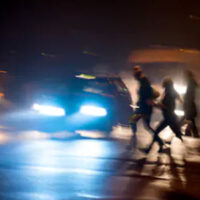
A pedestrian accident after dark often produces an immediate argument from the driver or insurance company: the pedestrian was difficult to see. That explanation can sound persuasive until the scene is examined closely. Streetlights, headlights, vehicle speed, nearby storefronts, traffic signals, signs, and other sources of illumination all affect what a driver could reasonably have seen before impact.
In San Juan, nighttime pedestrian traffic is common around residential neighborhoods, commercial districts, restaurants, hotels, transit stops, and entertainment areas. A serious collision in Santurce, Condado, Hato Rey, or another part of the metropolitan area may require more than a police report to determine how visibility actually affected the crash. An experienced San Juan pedestrian accident lawyer can investigate the physical scene, available video, vehicle evidence, and other details that help reconstruct the seconds before a pedestrian was struck.
Darkness Does Not Answer What the Driver Could See
Nighttime visibility is rarely a simple question of whether the road was “dark.” A pedestrian may have been illuminated by a streetlight, storefront, illuminated sign, traffic signal, another vehicle, or the approaching vehicle’s headlights. Even relatively small changes in the location of lighting can affect the distance from which a person becomes visible.
Puerto Rico law recognizes that drivers must adjust their driving to existing road conditions. Article 5.01 of the Puerto Rico Vehicle and Traffic Law, 9 L.P.R.A. § 5121, requires drivers to travel at a speed that permits proper control of the vehicle and to slow or stop when necessary to avoid an accident. The law specifically calls for a safe and appropriate speed when special dangers involving pedestrians, traffic, weather, or roadway conditions are present.
That requirement can become particularly important after dark. A driver traveling within the posted speed limit may still have been moving too quickly for the available sight distance. If the driver could not stop within the portion of roadway illuminated ahead, vehicle speed becomes part of the visibility investigation rather than a separate issue.
Headlights Can Become Important Physical Evidence
Puerto Rico also imposes specific requirements for vehicle lighting. Article 14.04 requires motorists to use required vehicle lights from sunset to sunrise and whenever visibility is inadequate. Article 14.05 requires motor vehicles to have front headlights capable of illuminating the roadway ahead for a specified distance, while also providing for lower-intensity lighting under appropriate circumstances.
After a nighttime pedestrian accident, the condition and operation of those headlights can matter considerably. Investigators may examine whether both lamps were functioning, what setting the driver was using, whether the lenses were damaged or clouded before the collision, and how the beam would have illuminated the pedestrian’s position.
Speed and headlight illumination must also be considered together. A pedestrian who first became visible at a particular distance might have been avoidable at one speed but not another. Reconstruction evidence can help determine how much time the driver had to perceive the pedestrian, begin braking, and attempt an evasive maneuver.
Street Lighting Should Be Documented Before the Scene Changes
Street lighting is another major part of the investigation. Federal Highway Administration research recognizes roadway lighting as an important nighttime safety measure and reports that properly designed intersection lighting can substantially reduce nighttime pedestrian injury crashes. (Federal Highway Administration)
The actual condition of the crash location should be documented as soon as possible. A photograph taken during daylight does little to show what a driver could see at 10:30 p.m. Investigators may return at approximately the same time of night, photograph the roadway from the driver’s direction of travel, identify working and nonworking streetlights, and determine whether trees, signs, parked vehicles, or other objects blocked available light.
Conditions can also change quickly. A burned-out light may be repaired. A business may change its exterior lighting. Construction barriers can disappear. Trees may be trimmed. Preserving photographs and video close to the date of the accident can prevent a later dispute from being decided based on a scene that no longer resembles the one encountered by the pedestrian and driver.
Nearby Businesses May Have Recorded the Crash
One of the most valuable sources of evidence may be located outside the roadway itself. Restaurants, hotels, apartment buildings, parking facilities, gas stations, and other businesses frequently operate exterior surveillance cameras. A camera does not need to capture the actual impact to be useful.
Video may show the pedestrian approaching the roadway, the vehicle’s speed relative to surrounding traffic, braking, traffic-signal timing, other vehicles, or the amount of ambient light shortly before the collision. Footage from several cameras can sometimes establish a sequence that no single recording shows completely.
Obtaining that evidence quickly can be critical because surveillance systems often overwrite older recordings. Waiting until the insurance company formally disputes visibility may mean that useful footage has already disappeared.
Dark Clothing Is Evidence, but It Does Not Automatically Establish Fault
Insurance companies may focus heavily on what the pedestrian was wearing. Dark clothing can affect visibility, especially on a poorly illuminated road, but clothing does not answer every question about fault. The location of the pedestrian, surrounding lighting, headlight performance, vehicle speed, driver attention, and available reaction time all remain relevant.
Puerto Rico’s traffic law also places affirmative duties on motorists. Under Article 9.03, drivers must take precautions to avoid striking pedestrians. At qualifying crosswalks, motorists are required to yield and slow or stop when necessary. Significantly, the statute states that precautions must still be taken even when a pedestrian is making incorrect or illegal use of the roadway.
A defense based entirely on a pedestrian wearing black clothing or being difficult to see can therefore miss a larger part of the accident. The question is not simply what the pedestrian wore. Evidence must show where the pedestrian was, how long the person was potentially visible, what the driver’s headlights illuminated, and what the driver was doing during those final seconds.
A Pedestrian’s Conduct Can Still Be Examined
Pedestrians also have responsibilities under Puerto Rico law. Article 9.02 addresses how pedestrians should cross public roads, including the use of crosswalks and traffic signals in specified situations. A pedestrian crossing outside an intersection or marked crossing may be required to yield to traffic.
A violation does not necessarily end an injury claim. Article 1545 of Puerto Rico’s 2020 Civil Code provides that a harmed person’s concurrent negligence does not eliminate another party’s responsibility, although compensation can be reduced according to the injured person’s degree of fault.
This can make nighttime pedestrian cases especially fact-sensitive. An insurance company may argue that the pedestrian crossed at the wrong location, wore dark clothing, or entered the road unexpectedly. The injured pedestrian may have evidence showing that the driver was speeding, distracted, operating with inadequate lighting, or had enough time and distance to avoid the collision. Fault has to be evaluated from the complete sequence rather than a single fact selected after the accident.
Reconstructing the Driver’s View Can Challenge an Insurance Company’s Version
A serious pedestrian accident can leave the injured person unable to explain what happened. Head injuries, unconsciousness, emergency treatment, or the trauma of the collision may also create gaps in the pedestrian’s memory. The driver’s version can then become the first detailed account given to police and insurers.
Physical evidence can provide a more objective picture. Vehicle damage may indicate where the pedestrian was struck. Skid marks, debris, electronic vehicle data, photographs, witness accounts, and surveillance recordings can help establish speed and movement. Medical records can also document injuries that are consistent with the force and direction of the collision.
The strongest visibility investigation attempts to recreate the driver’s actual approach to the scene. For someone facing significant medical expenses, lost wages, or lasting injuries, working with a San Juan pedestrian accident lawyer can help preserve evidence before the roadway, vehicles, and electronic records change or disappear.
Contact Our San Juan Pedestrian Accident Lawyers at The Pendas Law Firm
If you or someone in your family was struck by a vehicle at night in San Juan, a dispute over darkness or visibility should not be accepted without a careful investigation of the scene. Contact The Pendas Law Firm to speak with an experienced San Juan pedestrian accident lawyer and learn how we can help pursue compensation for your injuries, medical expenses, lost income, and other losses after a pedestrian accident.
Sources:
Puerto Rico Office of Management and Budget, Ley de Vehículos y Tránsito de Puerto Rico, Ley 22-2000, según enmendada, including Articles 5.01, 9.02, 9.03, 14.04, and 14.05:
bvirtualogp.pr.gov/ogp/bvirtual/leyesreferencia/pdf/22-2000.pdf (Bvirtual OGP)
Puerto Rico Office of Management and Budget, Código Civil de Puerto Rico de 2020, Ley 55-2020, según enmendada, Articles 1536 and 1545:
bvirtualogp.pr.gov/ogp/Bvirtual/leyesreferencia/PDF/55-2020.pdf (Bvirtual OGP)
Federal Highway Administration, Nighttime Visibility for Safety:
fhwa.dot.gov/innovation/everydaycounts/edc_7/nighttime_visibility.cfm (Federal Highway Administration)
Federal Highway Administration, Lighting — Proven Safety Countermeasure:
highways.dot.gov/safety/proven-safety-countermeasures/lighting (Federal Highway Administration)