

Lane-Change Auto Accidents
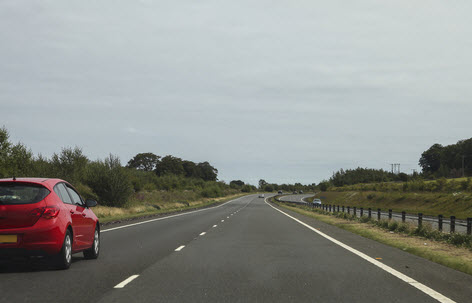
Florida motorists owe others a duty to drive safely and in a reasonable manner. Therefore, as a motorist, even if you feel like driving is a routine activity to you because of always being behind the wheel, ensure you always obey all traffic rules so you can avoid causing harm to yourself and others.
Unfortunately, Florida is notorious for unsafe driving, with one of the prevalent dangerous driving habits being unsafe lane-changing. According to statistics, Florida motorists can cause up to 13,000 lane-change auto accidents in a year. Such accidents result in fatalities and both severe and minor injuries.
If another motorist that unsafely changed lanes caused the car accident that led to your severe injuries, you might be eligible for compensation. However, to ensure you get the compensation you deserve, make sure you work with a skilled personal injury attorney. A qualified attorney can help you prove liability and obtain compensation even in a complex situation. For instance, an attorney can help you get compensation in a case where you are found partly at fault for your lane-change accident.
What Causes Lane-Change Accidents?
Most lane-change accidents happen because of negligence. Some of the negligent acts that lead to lane-change accidents include;
- Failing to check for blind spots through mirrors
- Failing to use signals
- Entering lanes without the right of way
- Changing lanes even when there isn’t enough distance between cars
Some of these negligent acts are usually a result of other negligent actions. For example, a motorist might fail to check their mirrors because of a distraction.
Proving Liability in a Lane-Change Accident Claim
If you sustained severe injuries in a lane-change accident, you might be qualified to file a lawsuit against an at-fault party. In a lane-change accident case, the liable party is usually the motorist that negligently changed lanes just before the accident. However, sometimes, things can get complicated. For instance, if both you and the other motorist changed lanes just before the accident, proving liability might be challenging.
Nevertheless, your attorney can still help you obtain compensation even if you are partly at fault for your lane-change accident. If both you and the other driver are to blame for the accident, the court will award partial blame to each party. Note that the percentage of your fault will reduce the amount of compensation you receive in such a case. For instance, if the award in your case is $200,000, the court will reduce that amount to $160,000 if your percentage of fault is 20%.
Evidence You Can Use To Support Your Claim
Some of the types of evidence you and your attorney can use to support your claim include;
- Photos from the accident scene
- Video footage
- Eyewitness accounts
Contact a Miami Personal Injury Attorney for Help
If another motorist’s negligence caused your lane-change auto accident, it is crucial that you reach out to a skilled personal injury attorney immediately. Our Miami personal injury attorneys at the Pendas Law Firm can review your case and help you accordingly. We have experience dealing with even the most complicated auto accidents. Contact us today so we can discuss your case.
The Pendas Law Firm also represents clients in the Orlando, Fort Lauderdale, Fort Myers, Tampa, Bradenton, Daytona Beach, Jacksonville, Ocala, and West Palm Beach areas.
flhsmv.gov/pdf/crashreports/crash_facts_2017.pdf